Most Japanese lessons teach you how to order ramen and ask for the station. Very few teach you what to say at a rubbish tip, which word is printed on a utility bill, or what to call the woven mats on the floor when insects have eaten half of them. A renovation vlog is a good place to meet that vocabulary, because the objects are on screen while the words come up.
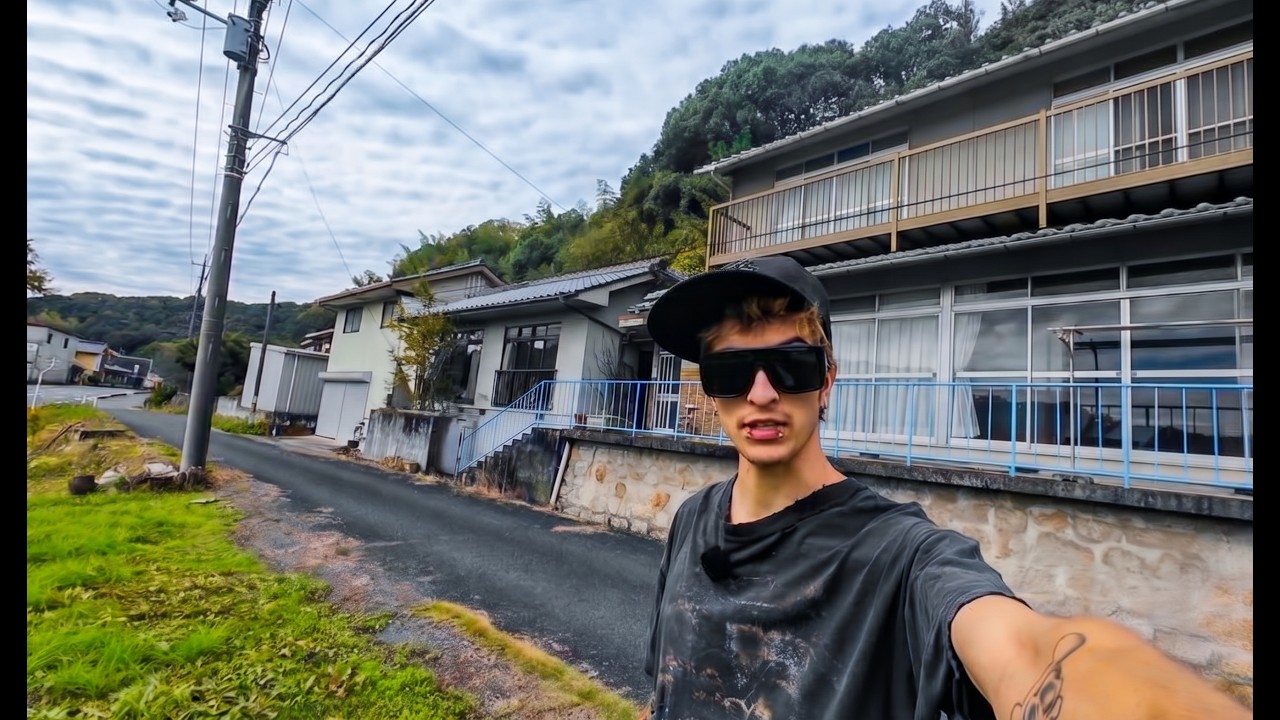
Matias Pissanetzky, who posts as Matias Pissanetzky, bought a cheap abandoned house, an akiya, in Ibara City, Okayama, and is bringing it back to life himself, on camera. His channel description promises the clean-out, the repairs, the real costs and the mistakes, and what it is like for a foreigner to buy and renovate a house in rural Japan. Alongside the long edited videos he posts Shorts and live streams from the house, and this post sticks to the edited ones. His videos are in English, so the Japanese is something you pick up from the house around him rather than from his narration.
I came to Japan to do this. I have wanted to do this for years, and I knew what area I wanted to be in.
Start here: the week the renovation really begins
He left the choice of start video to us, so we picked Renovations Start On My Japanese Abandoned House (AKIYA), part four of the series and a little over an hour long. It opens with a recap for new viewers: he bought the property for 12,000 USD, it is about 2,700 square feet, and it is three buildings on three separate lots, built in 1973, 1987 and 2003, plus a fourth corner lot. Then he gets to work.

Start with this video
Matias Pissanetzky
What follows is a day-by-day account of the unglamorous middle of a renovation. He loads a small truck with years of accumulated junk and drives it to the dump, works out how the weighing and the intercom operate, has the old pit toilet pumped out, improvises a shower, and starts to find out how many of the tatami rooms will need new mats. It is a good first video for a learner because the vocabulary repeats: the same few objects and situations come round again and again, which makes the words easy to catch.
What akiya means, and how big the story is
空き家 (akiya) is written with the verb 空く (aku, to be empty) and the character for house. Japan has a great many of them. In the 2023 Housing and Land Survey, published by the Statistics Bureau of Japan, the number of vacant dwellings was 9,002 thousand, the highest ever, and the vacancy rate was a record 13.8 percent of 65,047 thousand homes. The Bureau's own results summary (in Japanese, PDF) adds that 385万戸 (3.85 million homes) were empty homes that are not for rent, not for sale and not second homes, up 370,000 from 2018. That last group is where a house like Matias's sits, and it is a large part of why akiya has become a word foreign property hunters search for.
Words you'll meet
Every term below comes from the video, its title or his description, or sits directly beside something he shows.
| Japanese | Reading | Meaning |
|---|---|---|
| 空き家 | akiya | vacant house, the word in the title |
| 畳 | tatami | woven floor mats; he says a room "is going to need all new tatami" |
| 洋室 | yōshitsu | Western-style room, which he calls the western room (the traditional counterpart is 和室, washitsu) |
| ごみ | gomi | rubbish, what the dump runs are for |
| 軽トラ | keitora | kei truck, the small truck he calls his K-truck |
| インターホン | intāhon | intercom, what he presses at the dump |
| 電気・水道・ガス | denki, suidō, gasu | electricity, water, gas, the bills he pays through online portals when he is away |
At the dump he is asked whether his rubbish is personal or business rubbish, and he explains that the business kind is taxed and the personal kind is free. He also describes pressing the intercom and telling the attendant that he does not speak Japanese before carrying on in Japanese, which is a very natural thing to try. If you want to hear how other errands sound in the language, our pieces on a family's first week in Japan and a first year working and living in Japan cover the same territory from other angles.
Try it tonight
Ten minutes. Watch the first ten minutes of the video with the sound on and keep a note open. Each time he shows a mat, a bill, a sign or a machine, pause and say the matching word from the table out loud, then write it down. Aim for five. Then replay the dump section and listen for the short Japanese exchanges between his English. If you watch it in Glosaire, you can tap the words as they come up. Our guide to choosing manageable Japanese video explains why mixed English and Japanese footage like this is a gentle way in.
More from the channel
For the beginning of the story, I Spent The First Night in My Japanese Abandoned House (AKIYA) is his first night in the house. My First Week Living in a Japanese Abandoned House... It's a LOT of Work! covers the first week, and I Bought a House in Japan... Now I Have to Deal With ALL THIS TRASH! goes deeper into the rubbish problem.
Follow Matias Pissanetzky on YouTube for the renovation as it happens.