Some of the most useful Japanese listening is the least exciting: someone puts groceries in the fridge, washes their hands, turns on the rice cooker and says what they are doing as they go. The sentences are short, the same household words come round again and again, and nothing dramatic happens that you would need to keep up with.
Hikaru is a Japanese creator who lives in Kyoto and films that kind of video. His channel, Hikaru, daily life in Japan, is a collection of slow vlogs about ordinary days and evenings, mostly after work: shopping at the supermarket, cooking at home, getting into comfortable clothes, eating, and going to bed. The Japanese comes as captions over the footage, and the pace leaves you time to read each line before the next one arrives.
Why a quiet evening is good listening practice
Stephen Krashen, the linguist behind the input hypothesis, proposed a method he called narrow listening: instead of listening to a bit of everything, you collect several recordings about one topic and replay them as often as you like. His 1996 paper in the journal System makes the case for it. The idea is that a single subject keeps the vocabulary in a small circle, so each new recording is partly familiar and the repeats do the teaching.
A channel of after-work vlogs is that setup almost by accident. Supermarket, kitchen, shower, dinner, bed: the places and objects repeat from video to video, and so do the words for them. I should be honest that this is an argument from Krashen's proposal rather than a test of Hikaru's videos, but the logic fits. It also fits what we have written about choosing video you can actually follow, where a familiar setting is half the battle.
Start here: a tired night, a pot of curry

Start with this video
Hikaru
Hikaru picked this video, "Alone After Work in Japan | Exhausted but Trying to Stay Cozy", as the one to start with. It follows an evening from the supermarket to bedtime. He buys cucumbers, enoki mushrooms, a mapo tofu mix and a few other things, with the prices written on screen, gets home, says ただいま to an empty flat, washes his hands, puts the shopping away and showers because the day was hot.
The line that sets the tone for the whole video is a small one.
まずは手を洗いましょう
That is "first, let's wash our hands", and it is a good model of his Japanese: まずは (first of all), then the thing, then a polite let's. He talks to the viewer the same way through the rest of the evening. Here is the line the way it looks inside Glosaire, with each word tappable.

Hover, focus, or tap a subtitle word for its contextual meaning.
First, let's wash our hands. まずは means "first of all". 洗いましょう is 洗う (to wash) in the ましょう form, a polite "let's", which is how Hikaru talks to the viewer through the whole evening.
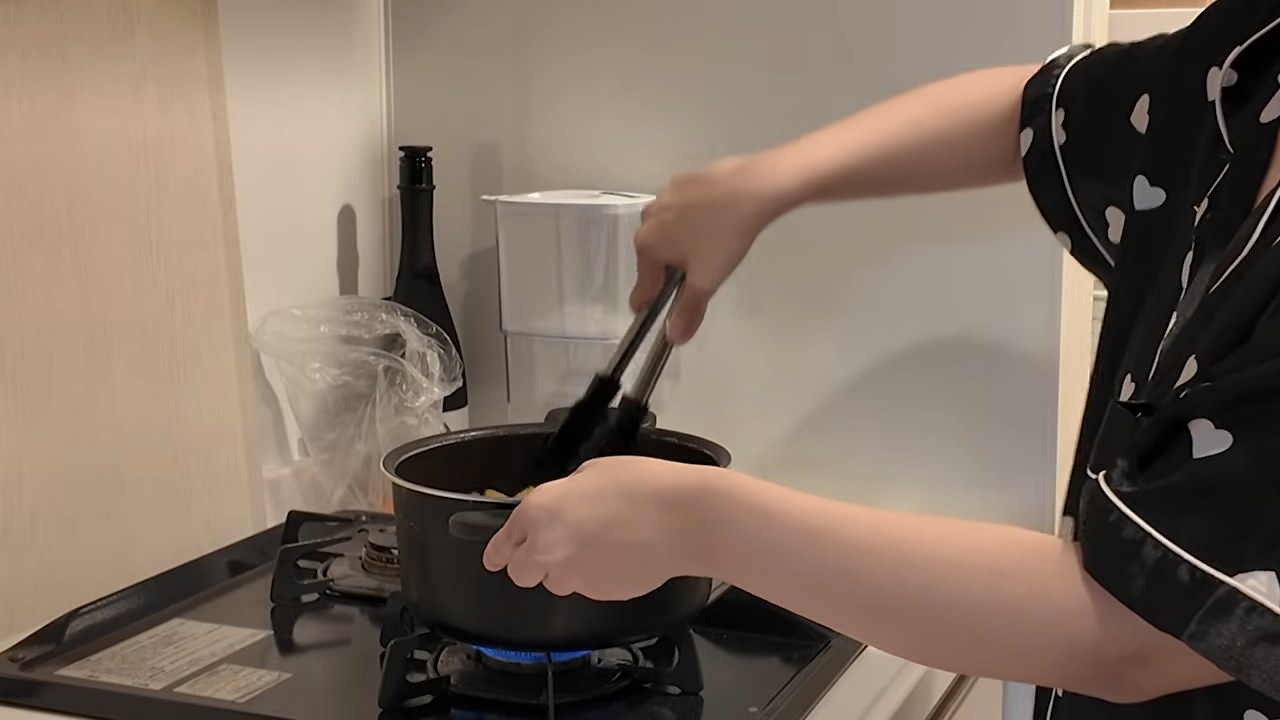
Then comes the cooking. He moves a bag of rice into a container (with a little packet to keep insects out), sets three cups of rice going in the cooker on the floor of a small room, and makes curry while it cooks. He says he is not a confident cook, and he uses pork because beef is so expensive. He eats it, says it came out well, and mentions that a big pot means several days of meals, with curry udon as the fallback if he gets bored. Dessert is ice cream in front of Minions on Netflix, and then he brushes his teeth and goes to bed early.
Almost every line describes the thing on screen, so you can watch once for the story and once more for the words. If you want a wider look at what this kind of video offers, our guide to everyday life in Japan on YouTube covers more channels like this.
His second pick is Alone After Work in Japan | Grocery Shopping, Dinner & Cozy Night Routine, which cannot be embedded here, so it opens on YouTube. Dinner is 冷やし中華 (hiyashi chūka), cold noodles with cucumber, tomato and ham, which he describes as a summer staple and tops with sesame sauce, skipping the shredded egg because he is tired. After eating he walks back to the supermarket in the evening just to look around, and picks up powdered caramel café au lait and mango-orange tea, a mango pudding and a very cheap bottle of tea. The shopping half is full of prices and drink names you will see on real shelves.
Words you'll hear
These are all from the two videos, and all words you would use in your own kitchen.
| Japanese | Reading | Meaning |
|---|---|---|
| 食材 | shokuzai | ingredients, the groceries he has just bought |
| 冷蔵庫 | reizōko | refrigerator, where the shopping goes |
| お米 | okome | rice, the uncooked grain he moves into a container |
| 炊飯器 | suihanki | rice cooker |
| 豚肉 | butaniku | pork, used in the curry |
| 牛肉 | gyūniku | beef, which he says is too expensive |
| 部屋着 | heyagi | clothes for wearing around the house |
| いただきます | itadakimasu | what you say before you eat; he says it in both videos |
Try it tonight
Ten minutes is enough. Play the first three minutes of the curry video straight through, with the prices on screen as your clue to what he is buying. Rewind and pause on ただいま and まずは手を洗いましょう, and say each one back out loud, copying his rhythm. Then keep watching and, every time he puts something away or moves it, name the thing in Japanese before he does, using the table above: 冷蔵庫, お米, 炊飯器. You do not need to catch everything. If you watch it in Glosaire, you can tap each word as it comes up.
More from the channel
If you like this pace, there is more where it came from. Hikaru's payday video is about treating himself at the end of the month, one normal day at home covers work, cooking and cleaning, and launch day for Mario Kart on the Switch 2 takes him out into Kyoto. The channel also has a few vlogs of days out, including the Nintendo Store and a trip to Expo 2025 in Osaka.
Follow Hikaru on YouTube for more quiet evenings.