Most Japanese in textbooks is polite, and most Japanese at a family table is not. A single video that gives you both, with captions for each, is rare, and Rakko Daisy has made one.
Rakko Daisy is a family of three, Dad, Mum and their 2-year-old daughter Daisy, who took early retirement, came back to Japan after many years in the United States and are travelling around the country in a campervan. Their channel follows that life: nights in the van, regional food, Hokkaido scenery, and the occasional camping trip in the Jeep Wrangler they brought back from America. It is a young channel, 56 videos since late 2025, and the family writes their own Japanese captions, which matters here. Our guide to everyday life in Japan on YouTube covers other channels like this, and Hikaru's calm after-work vlogs from Kyoto are a good companion.
まさかキャンピングカーの中で出会えるとは。思いがけない小さな奇跡です。
消毒液タイプのウイスキーじゃない?
Both lines come from the same video, the first at 10:42 and the second at 4:23. The first is the narration and the second is the whisky table, and they are the same language in two different outfits.
Narration is です/ます, table talk is not
In the narration the family speaks to the viewer, and the sentences end in polite forms: 思いがけない小さな奇跡です, or 天井のマックスファンに、外から入り込んだようです ("it seems it came in through the ceiling fan from outside"). There is also a pattern worth noticing in the firefly scene, the nominal sentence. 天井に、何か光るものが。 ("on the ceiling, something glowing") has no verb at all. The sentence stops once the picture is clear, and the caption leaves you looking at the ceiling too.
At the table the endings change. 消毒液タイプのウイスキーじゃない? uses じゃない? to ask for agreement, ウイスキーってそういうもんだろう uses だろう for a confident guess, and カリっていう牡蠣がいたね uses っていう for "the one called". Nothing here is rude, it is simply how a family talks to each other. In the firefly scene the lines get shorter still: 見える? そこだ! 見て! are quick spotting calls, the kind of language that comes out with a 2-year-old in the room.
Linguists treat this switching as ordinary rather than a slip. Yasuko Obana's study of speech level shifts in Japanese, published in the journal Pragmatics, argues that speakers move between plain and polite (です/ます) forms depending on the situation and what they feel in the moment, so a level is not fixed to a person. That is why hearing both in one video helps: you learn which register belongs to which moment, not just what the words mean. That is my reading of her point, not a test of this video.
Start here: oysters, whisky and a firefly in the van
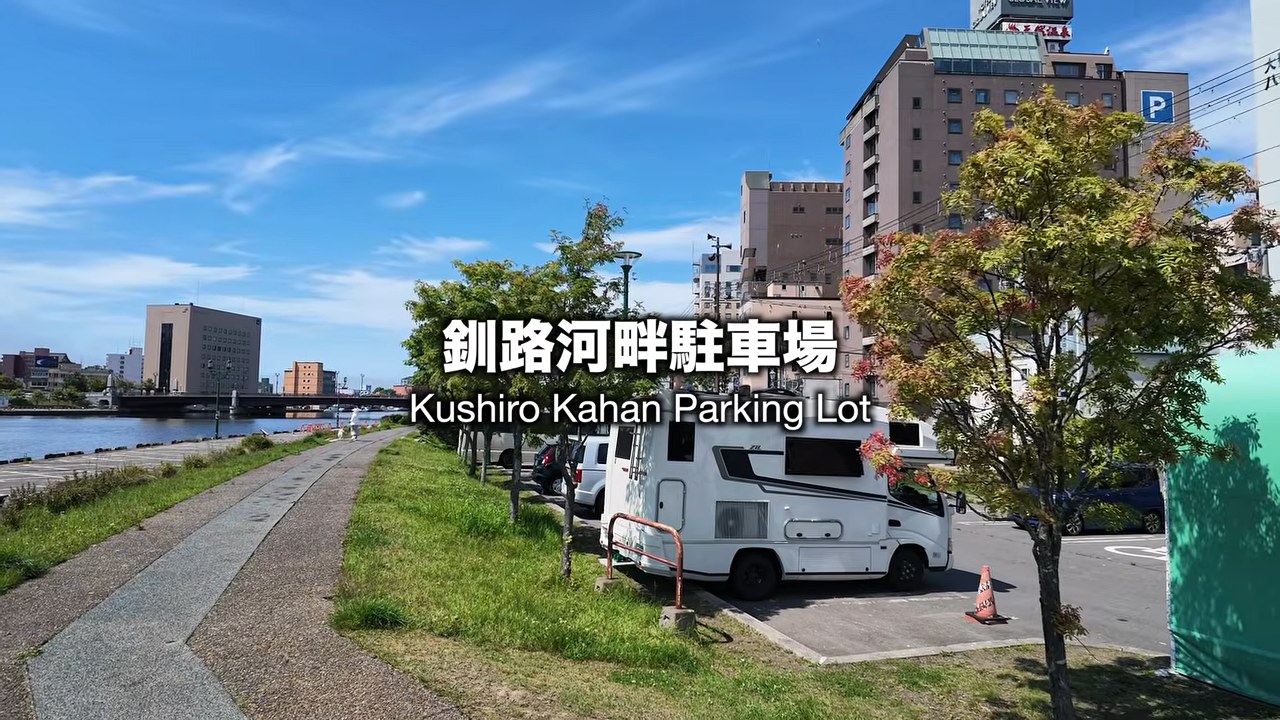
The video, 【字幕ON】キャンピングカーでまさかの奇跡が…..!? | 北海道車中泊 | 厚岸・釧路 (shown to English viewers as "A Firefly in Our Campervan?! | Oysters, Whisky & Summer Nights in Hokkaido"), is about 24 minutes long. Dad said they picked it because it has captions and a lot of speaking. The first part is in Akkeshi, where the family tries the town's famous oysters and whisky at a 道の駅, and the description asks whisky lovers to please forget Mum's remark that it tasted like disinfectant.
That night they switch the lights off in the van to sleep, and the firefly arrives. The narration says that just as they were about to sleep, something glowed on the ceiling, and a firefly had flown in, apparently through the ceiling fan. Daisy had learned about fireflies in Toyoda, in Yamaguchi, before they came to Hokkaido, and the family say they had always wanted to take her to see them. They let it go outside, and the scene ends with バイバーイ.

Hover, focus, or tap a subtitle word for its contextual meaning.
An unexpected little miracle. 思いがけない comes from 思う plus がけない, roughly "not even thought of", so it means unexpected. 小さな is the な-adjective form of small and goes straight before a noun, here 奇跡.

Start with this video
Rakko Daisy
After the firefly the video moves on to cranes by the road, the Kushiro market and the town's fireworks festival, so it is a gentle trip rather than a plot you must keep up with. If you are choosing between videos, our note on how to choose manageable Japanese video explains why captions and a steady pace matter.
Words you'll hear
| Japanese | Reading | Meaning |
|---|---|---|
| 牡蠣 | kaki | oyster, Akkeshi's famous food |
| 道の駅 | michi no eki | roadside station, where they eat and park |
| 車中泊 | shachūhaku | sleeping in the car overnight |
| 消毒液 | shōdokueki | disinfectant, Mum's verdict on the whisky |
| ホタル | hotaru | firefly |
| 天井 | tenjō | ceiling, where the firefly settles |
| 花火大会 | hanabi taikai | fireworks festival, Daisy's first |
| タンチョウ | tanchō | red-crowned crane, spotted from the road |
| 勝手丼 | kattedon | build-your-own seafood rice bowl |
| 奇跡 | kiseki | miracle |
Try it tonight
Ten minutes is enough, using the firefly scene from 9:33 to 12:05. On the first pass, just read the captions and follow the story. On the second pass, listen for the switch between the narrator and the family's own voices, and notice which lines end in です or ようです and which are short and casual. Then shadow three lines out loud, copying the rhythm: two from the narration, such as 天井に、何か光るものが。 and 思いがけない小さな奇跡です。, and one from the table, such as 消毒液タイプのウイスキーじゃない? from the whisky scene. If you watch it in Glosaire, you can tap each word as it comes up. Saying lines back is the step that turns listening into speech, which we wrote about in why immersion won't make you speak.
More from the channel
The family's ferry trip to Hokkaido, 【フェリー旅】仕事も家も捨て、キャンピングカーで北海道へ。豪華和室で18時間, is among their most-watched videos. Wakkanai food, 【稚内車中泊】妻が完全にハマった、最北の街のグルメ, follows Mum falling for the northernmost city's cooking. In the Okhotsk game pilgrimage, 紋別・網走でゲームと同じ景色を探してみた, they look for the scenery of a game they loved in childhood. And the breakdown episode, 【走行不能】ふもとっぱらキャンプ場を出た直後、キャンピングカーが走れなくなりました, shows what happens when the campervan stops running.
Follow Rakko Daisy on YouTube for more captioned travel Japanese.