If you want the easiest listening practice there is, pick a story told in order. When someone says "first this happened, then that", you always know roughly where they are, so a word you miss costs you very little, and the next sentence usually gives you a second chance at it. A trip that kept going wrong is a very good story for this, because every setback needs a reason and every reason gets explained.
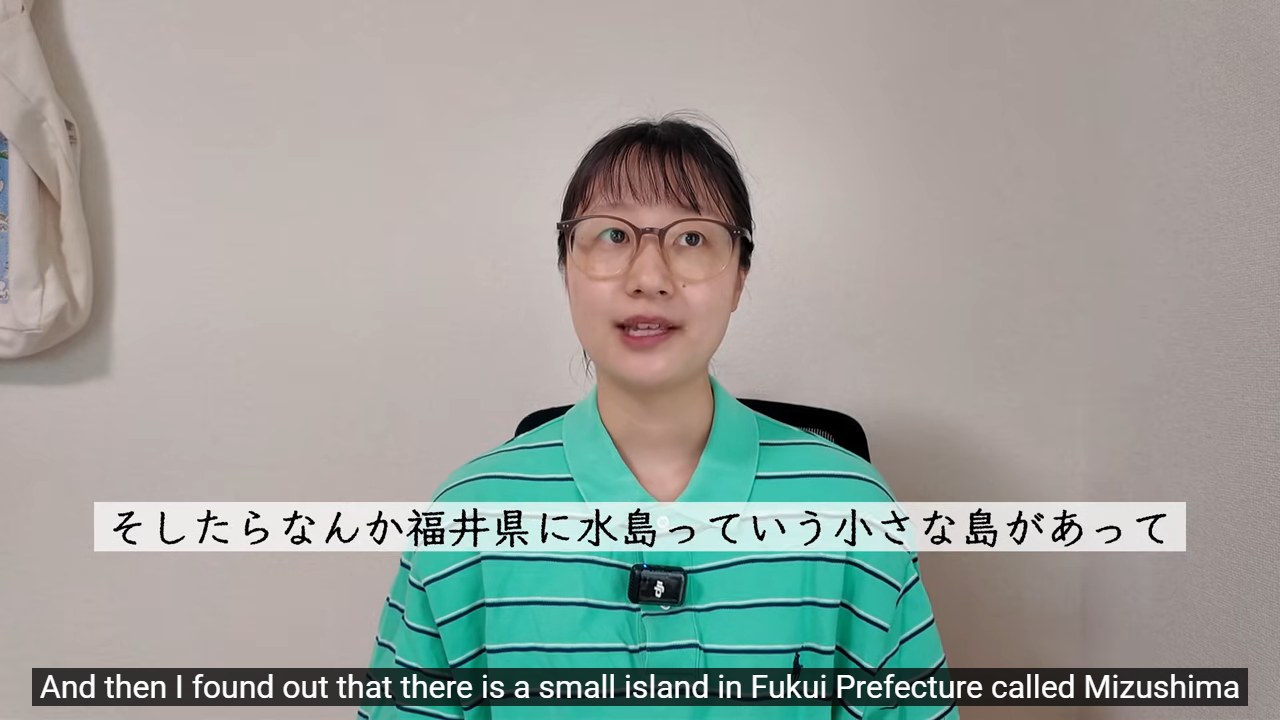
Mizuki posts exactly that on YouTube as Mizuki~Japanese teacher~. She teaches Japanese online (she offers lessons on italki and Preply), and her channel is where she shares her daily life and everyday Japanese for learners to practise listening. There are long, chatty podcast episodes, conversations with her mother and family, and a steady run of one-minute clips that go through hiragana and katakana one letter at a time. The long episodes are mostly her talking to the camera about her own life: part-time jobs from her university days, a haircut that made her sad, what to order at Starbucks in autumn.
A trip that gave her one good sentence
Here is the line the whole episode turns on, in her own words from the video.
夏が終わる前に、海に行きたいね。
It means "Before summer ends, I want to go to the sea," and she says it about the moment she and her partner gave up on the earlier plans and settled on the beach. It is a handy sentence to keep: 前に (mae ni) after a verb or a noun means "before", and 行きたい (ikitai) means "want to go".
Start here: a Fukui trip where three plans fell through

Start with this video
Mizuki~Japanese teacher~
This is the episode we start people with, and Mizuki agreed to it. It is episode #57, 予定通りじゃなかったけど結果最高の福井旅 (yotei dōri janakatta kedo kekka saikō no Fukui tabi), roughly "A Fukui trip that didn't go to plan but turned out great", and it runs about twenty minutes.
She begins with a short chat about some bandanas she bought for a dance recital, then moves on to a one-night trip at the end of August. The story is how she ended up in Fukui. She had planned to drive to Takasaki to watch a 3-on-3 basketball tournament, but found out a week before that the player she follows would be playing for Japan's national team elsewhere. Her next idea was a stargazing tour in Nagano, which she dropped because the only hotel left was around 50,000 yen a night. Then she and her partner settled on the sea, and a small island she had found in Fukui turned out to have its boat out of service for repairs after a typhoon. In the end she chose Wakasa Wada Beach, partly because she does not like crowds and wanted somewhere clean but less busy.

Hover, focus, or tap a subtitle word for its contextual meaning.
Before summer ends, I want to go to the sea. 前に after a verb means "before doing it", so 終わる前に is "before it ends". 行きたい is 行く with たい, which says you want to go.
Why a story and a teacher make it easy to follow
A teacher's podcast has a quality that a casual vlog often lacks: she says things twice, in different words, and spells out the reason for each change of plan, so a phrase you did not catch the first time often comes back a sentence later. The research on long-form listening points the same way. Renandya and Farrell, in a 2011 article in ELT Journal, argue for extensive listening, meaning plenty of easy listening that you follow without stopping at every word, as the way to build listening skill. A twenty-minute episode in a voice you already like is that, with nobody grading you.
It also helps if you have been stuck on the ear side of Japanese. We have written about why reading can run ahead of listening, and about why hours of immersion alone will not make you speak, and a calm story like this is a gentle way into both problems. Her channel notes also say you can turn on subtitles with the CC button, and that her episodes show the difference between polite and casual speech.
What follows the planning is where the title comes from. She swims for about three hours and eats yakisoba and takoyaki from the beach huts, and then a sudden downpour sends everyone under the tents for around twenty minutes. That night she stays at a Dormy Inn in Tsuruga, where the baths have a cold-water pull rope under a toy parrot, and eats sauce katsudon at a restaurant called Yoroppa-ken. The next morning she visits a pine grove by the sea, has a seafood rice bowl, and stops at Uniqlo on the way home to Aichi. Her verdict on the seafood bowl is honest: the yellowtail was the best thing, but she could tell the salmon had been frozen.
Travel and plan words you'll hear
If you watch it in Glosaire, you can tap each word as it comes up. These are the ones that carry the story.
| Japanese | Reading | Meaning |
|---|---|---|
| 予定 | yotei | a plan or schedule; the word behind the episode title |
| 計画 | keikaku | a plan; she says that if she went she would want to make one properly, with savings |
| 諦める | akirameru | to give up; comes up each time a plan falls through |
| 準備 | junbi | preparation; getting ready for the sea with a float and goggles |
| 旅行 | ryokō | a trip; she uses it for both of her August trips |
| 大雨 | ōame | heavy rain; the downpour at the beach |
| 観光 | kankō | sightseeing; how she describes the morning of the second day |
| 夜ご飯 | yoru gohan | dinner; when she goes to the katsudon restaurant |
Try it tonight
Ten minutes is enough. Play the first part of the trip story, from the point where she says she planned to go to the basketball tournament, and listen once straight through, noting only the places she names. Rewind and listen again, and this time pause each time she says 諦めた or 諦めました and write down what she gave up. Then say one sentence of your own: 夏が終わる前に、__に行きたい。 Fill the gap with a place you would actually like to go.
More from the channel
The episode before this one is 琵琶湖とビワマスが最高すぎた1泊2日 (an overnight trip to Lake Biwa and its biwa trout), the first of her August trips and a good second listen with the same shape. She also has 日本の秋とスタバの注文方法 (autumn in Japan and how to order at Starbucks), 日本の部活ってどんな感じ? (what school club activities are like in Japan) and 日本語をもっと話せるようになるには? (how to get better at speaking Japanese), which is her most-watched recent episode.
If you like podcast-style Japanese like this, there are more in the same spirit: Yuka's podcast on Japanese collecting habits and Chiaki's Nihongo Cafe on kitsune and tanuki folktales. For picking the next video, how to choose manageable Japanese video covers what to look for.
Follow Mizuki on YouTube for more podcasts and listening practice, and if you would like to study with her directly, she links her online lessons from the channel.