収集癖 is not a word you will find in a beginner textbook, and it is a good example of the kind of word that real Japanese is full of: long-looking, a little formal, and much easier than it appears once someone takes it apart for you. A Japanese teacher named Yuka does exactly that in the middle of a podcast episode about her summer, which makes it a neat way to learn a new word from listening instead of from a list.
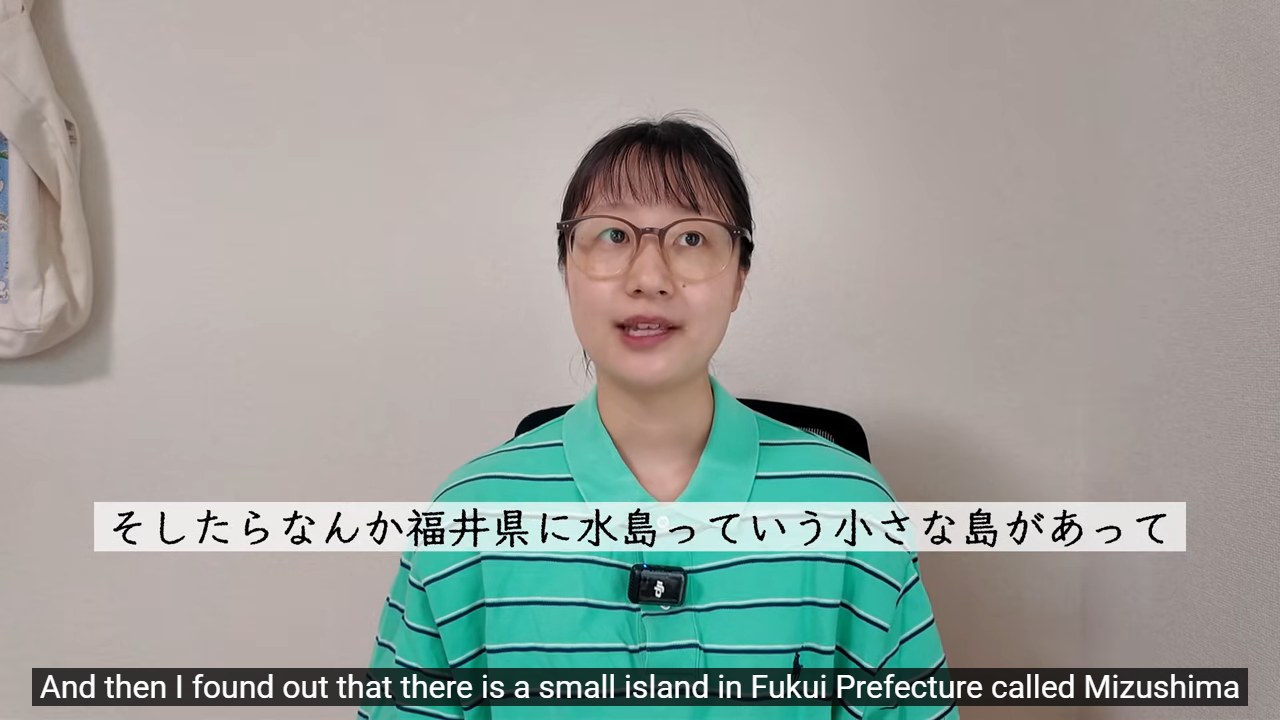
Yuka is a Japanese teacher (日本語教師, nihongo kyōshi), and her channel, ゆかのにほんごカフェ (Yuka no Nihongo Cafe), makes videos for people studying Japanese and for other Japanese teachers. For learners there are everyday-conversation videos, such as how to order at a convenience store, a restaurant or a cafe, and a numbered podcast series where she simply talks. For teachers she offers support with mock lessons, lesson-plan checks and ideas for introducing new points, which she says on the channel page.
How Yuka teaches 収集癖
The episode is 【Podcast】# 36 2026年の夏・日本人の収集癖 (roughly "Summer 2026 and the Japanese habit of collecting"), about twelve minutes long, and we suggested it as a place to start. She opens by saying hello after about eight or nine months without making videos, then tells the story of a first trip to Miyakojima, one of the islands of Okinawa, where she went snorkelling and saw sea turtles and a small clownfish, the kind people call "Nemo". She also bought her first goshuincho, the book where shrine seals are collected, and that leads her to the point of the episode: a friend from Taiwan once told her that Japanese people have a 収集癖.

Hover, focus, or tap a subtitle word for its contextual meaning.
Japanese people like collecting things, don't they? の turns 集める into a noun, "collecting", so 集めるのが好き means "like collecting". よね at the end checks that the listener agrees.

Start with this video
Yuka no Nihongo Cafe
What she does next is what a teacher does. She stops and asks if you know the word, then splits it in two, in Japanese, without translating:
「収集」は何かを集めるっていう意味で、「癖」はその人の習慣っていう意味があるんですけど
日本人は何か物を集めるのが好きだよね。
In English: 収集 means collecting something, 癖 means a person's habit, and then the sentence her friend said, "Japanese people like collecting things, don't they?" That order is worth copying whenever you meet a long compound. Break it into its kanji, give each part a meaning, and only then put it back together: collecting plus habit gives a collecting habit. Notice also that she uses the plain verb 集める (to gather) to say the same thing in everyday speech, so the formal word and the casual one arrive together.
The skill underneath has some research behind it. In a 2002 study in Applied Psycholinguistics, Yoshiko Mori asked 74 English-speaking college students of Japanese to guess the meaning of unfamiliar kanji compounds made of characters they knew, from the word alone, from context alone, or from both. Across the group, the two sources of help added up, which is what you would hope, but nearly half the students leaned too heavily on one or the other. Yuka's episode gives you both at once: the parts of the word, and a story about stickers and shrine books to hang them on.
What she collects, and the words around it
After the definition she gives examples, and they are the part you will remember. Sticker books have been popular in Japan for the last two or three years, she says, among children and adults, and she keeps stickers of characters she likes, mostly Cinnamoroll, plus limited Okinawa designs, because she is weak for 限定 (limited-edition) things. Right now she is collecting squishies, the soft squeezable toys shaped like animals, cakes, macarons and daifuku. She admits it gets expensive, wonders whether this is a Japanese thing or a human one, and ends by asking what you collect.
Because it is a podcast about her own summer, the vocabulary is the kind you will actually reuse. Here are the words that carry the episode:
| Japanese | Reading | Meaning |
|---|---|---|
| 収集 | しゅうしゅう (shūshū) | collecting, gathering |
| 癖 | くせ (kuse) | a habit, a tendency |
| 収集癖 | しゅうしゅうへき (shūshūheki) | a habit of collecting things |
| 集める | あつめる (atsumeru) | to collect, to gather |
| 限定 | げんてい (gentei) | limited edition, limited |
| 流行る | はやる (hayaru) | to be popular, to be in fashion |
| 思い出 | おもいで (omoide) | a memory |
Two notes on the table. Inside 収集癖 the second kanji is read へき (heki), while on its own it is くせ (kuse), as in 口癖 (kuchiguse), a verbal habit. And 流行る is how she describes sticker books and squishies, while 思い出 is the word she uses for the memories of her summer.
This episode is the same sort of friendly, personal talk as a podcast about a trip to Fukui, and a different mood from the folktale episodes on another teacher's cafe channel, so it is useful to listen to a few of them in a row: the sentence shapes repeat even when the topics change. If you can read Japanese better than you can follow it by ear, we wrote about why that happens and what to do. If you watch this episode in Glosaire, you can tap each word as it comes up.
Try it tonight
Ten minutes is enough. Play the part where she explains 収集癖 (about the middle of the video, after the goshuincho) and listen once with no pause. Then rewind, pause after 「日本人は何か物を集めるのが好きだよね。」 and say it back, matching her rhythm. Next, write the compound in two halves, 収集 and 癖, with your own meaning under each. Finish by answering her question in one sentence, for example 私は〇〇を集めています (I am collecting ○○), and say it out loud. That is a new word, a model sentence and a real answer to a real question, all from one short clip.
More from the channel
If you want another episode in the same voice, there is Podcast #37 on ソロ活, doing things alone, ranked by difficulty and Podcast #33 on 日本人が風邪の時にする特別なこと, what Japanese people do when they have a cold. Her most-watched videos are the 生活の日本語 (everyday Japanese) conversations, such as コンビニ会話, a convenience store conversation and レストラン注文方法, how to order at a restaurant.
Follow Yuka no Nihongo Cafe on YouTube for more podcast episodes and everyday Japanese.