Nearly everyone who starts Japanese learns to tack さん onto a name within the first week, usually without being told why it is there. It is a small word with a long history, and it turns out to be a good way into how politeness works in Japanese, including the cases where さん is the wrong choice and ちゃん, くん or 様 is the right one.
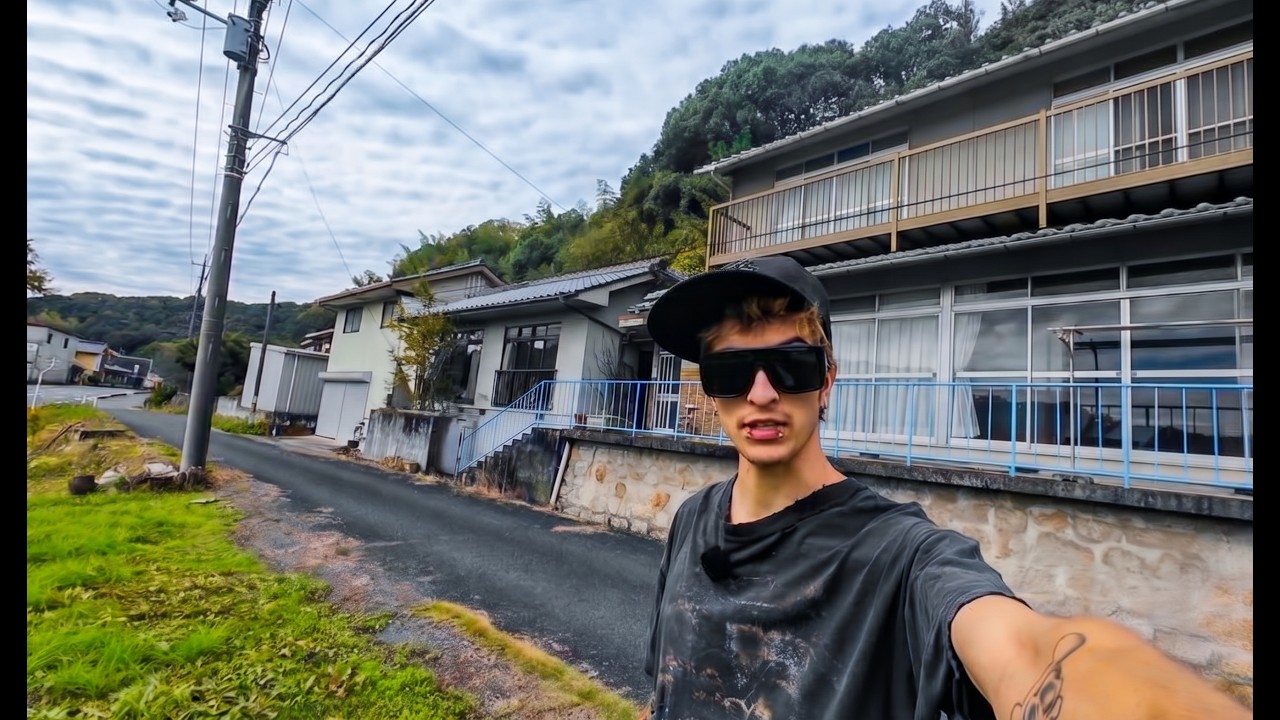
Kyota Ko runs one of the biggest English-language channels about Japanese culture, with short videos about Japanese words, folk tales and everyday life. He is also the author of several books, including Folk Tales of Japan and Underdogs of Japanese History, which he lists on his channel. A typical video takes a question a visitor might ask, such as why restroom signs come in those colours or where the word "Nippon" came from, and answers it with some history and a joke. We asked Kyota which video a learner should start with, and he picked this one, saying that etymology videos might interest people studying the language.
Start here: why does Japanese add -san to names?

Start with this video
Kyota Ko
It is a Short of under three minutes, and its argument is that -san exists because Japanese spent centuries avoiding bare names. This is how he puts the starting point and the ending:
In ancient to pre-modern times, names are thought to be a part of your soul, your existence.
So with every san you lose from your tongue, comes a thousand years of courtesy.
Because of that, people were addressed by something else: a place, a direction, a position. He gives examples, such as the Crown Prince being called Tōgū (East Palace) in The Tale of Genji, a lord being called 上様 (uesama, roughly "the one above") in period dramas, and the emperor being addressed as 陛下 (heika), which he says literally means "below the stairs".
Then he connects it to -san. According to the video, ordinary people added 様 (sama) to a nickname, and he explains sama as meaning "the direction towards" the person, so Gonbei-sama was a polite way of pointing at Gonbei without saying the name bare. Sama is still what service staff use for customers. But among peers it felt too heavy, so around the Edo period people softened sama into さん, and Tanaka-sama became Tanaka-san. He calls this a groundbreaking innovation, since it keeps the old rule of not naming people bluntly while being easy enough for everyday use. Today we even put it on animals, like ねこさん, just because it is cute.
It is a good first video because the claim is simple and you can test it against everything you hear afterwards. Treat it as Kyota's account of the history, told for a general audience, rather than a full linguistics lecture. The same idea, that a bit of everyday Japanese carries a social rule inside it, is what makes slang that escaped anime worth understanding too.
What the research says about choosing between them
The choice among these suffixes is not random. A 2015 paper by Stephanus Mangga in the journal PAROLE, "Variety Using of Address Forms in Japanese Society", looks at -chan, -kun, -san and -sama and links their use to three things: social distance, status and formality. That is a useful way to remember the table below. Before you pick one, ask how close you are to the person, who is higher up, and how formal the moment is.
The honorific family you meet first
| Suffix | Reading | Who it is for | Example |
|---|---|---|---|
| さん | san | The default for almost anyone you are not very close to: coworkers, neighbours, shopkeepers | 田中さん |
| ちゃん | chan | Small children, close friends and family, often girls and women you know well; friendly between adults, so not for someone you have just met | はなちゃん |
| くん | kun | Boys and younger men, and people a teacher or boss supervises | 山田くん |
| 様 | sama | A step more respectful than さん, heard from staff and seen on envelopes | お客様 (okyakusama), a customer |
| 先生 | sensei | Teachers and doctors, as a title alone or after a name | 田中先生 |
The one rule everyone needs: never attach さん to your own name. These words show respect to someone else, so you introduce yourself as 田中です, not 田中さんです.
Kyota's video about a coworker dropping the -san is a funny walk through what happens when a colleague switches from さん to くん, so it works as a second lesson once the table is familiar.
Try it tonight
Ten minutes is enough, and you do not need to understand any Japanese speech, because the Short is in English. Watch it once straight through. Then play it a second time and pause every time he says a name or a title: Tōgū, uesama, heika, Gonbei-sama, Tanaka-san. Say each one aloud, and for each decide whether the person addressed is above you, equal to you or a stranger. Finally, write down five people you know in the real world, say what you would call each one in Japanese, and check yourself against the table. If you watch it in Glosaire, you can tap each word as it comes up.
Words you'll meet
- さん (san): the everyday polite suffix after a name, which the Short says is a softened form of sama.
- 様 (sama): the more formal and respectful form, still used by service staff toward customers in the video.
- 陛下 (heika): your majesty, the way the emperor is addressed, which Kyota explains as literally "below the stairs".
- 上様 (uesama): a lord, as heard in samurai period dramas, where it means roughly "the one above".
- いらっしゃいませ (irasshaimase): the greeting shop staff call as you walk in, which Kyota's interview video explains as literally "please come in".
- 焼き芋 (yakiimo): baked sweet potato, the street seller's call he uses in that video as an example of Edo-style door-to-door selling.
- 女将 (okami): the woman who runs a ryokan, mentioned in that video as the source of a heartfelt welcome compared with a routine greeting.
More from the channel
If this one got you curious, Kyota's Irasshaimase interview is the longer version of the same approach, tracing a phrase you hear in every shop back to Edo street sellers and the women who pulled travellers into inns. In Neko-san he explains how cats ended up as gods again in Japan, and how Japan came to call itself Nippon or Nihon is another word-origin story in the same spirit as this one.
He also tells folktales, such as why foxes and raccoon dogs transform in Japanese folklore. If that subject catches you, our piece on kitsune, tanuki and Japanese folktales with Chiaki looks at the same animals in Japanese you can listen to.
Follow Kyota Ko on YouTube for more short histories of Japanese words, customs and stories.